 A recent symposium discussed best practices in the emergency delivery of TB preventive therapy (TPT) during the COVID-19 era and developing an actionable plan for rapid scale-up of TPT during 2021. A Stop TB Partnership modeling study predicts more than 1.4 million deaths from TB and 6.3 million additional cases of TB between 2020 and 2025 because of COVD-19’s impact on the health system. Scaling up access to TB preventive therapy is an emergency and must be part of the global COVID-19 and TB responses. TPT is part of a spectrum of services–the “Swiss cheese” model–of layering detection, treatment, and preventive services that are needed to mitigate the devastating effects of COVID-19 on TB and other health services.
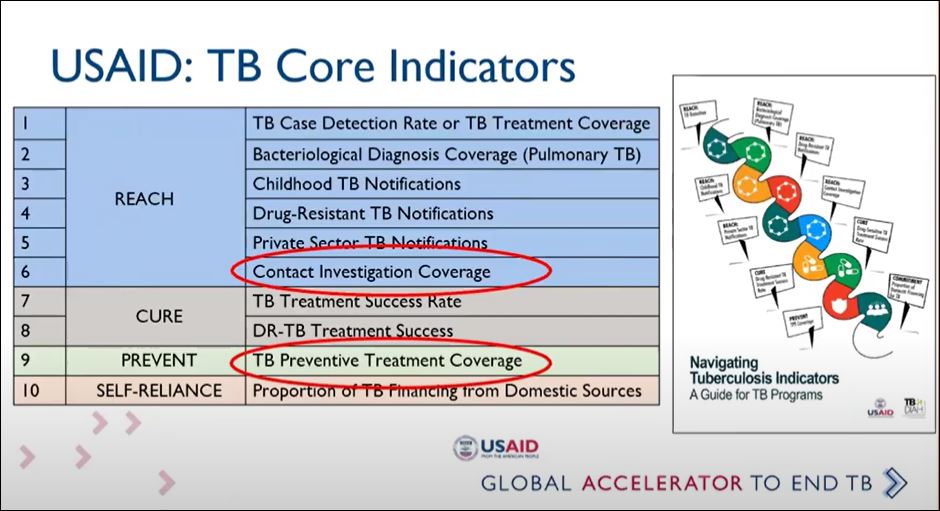
During the symposium, Dr. Sevim Ahmedov, United States Agency for International Development (USAID), discussed USAID’s efforts through the Global Accelerator to End TB to standardize measurements across their TB portfolio, resulting in ten TB core indicators. Two of these indicators, Contact Investigation Coverage and TB Preventive Treatment Coverage, relate directly to TB prevention. Dr. Ahmedov also discussed accomplishments and challenges related to scale-up of TPT treatment, contact investigation, and TB notification.
The symposium also included: (1) an update from the World Health Organization on global progress rolling out TPT; (2) presentation of program-level examples of TPT roll out from Pakistan, South Africa, Peru, and the CaP TB project; (3) perspectives from the academic community, civil society, donors, and affected peoples; and (4) closing remarks on urgent actions for improving TB diagnosis, prevention and treatment during the COVID-19 crisis from Dr. Madhukar Pai of McGill University.
The meeting was hosted by The Sentinel Project on Pediatric Drug-Resistant Tuberculosis, The Center for Global Health Delivery at Harvard Medical School, and El Centro de Salud Global de Socios En Salud.
The full-length recordings of this symposium in both English and Spanish and a list of the event’s speakers are available at https://ghdcenter.hms.harvard.edu/preventive-therapy.